
Niacinamide and salicylic acid have different roles: niacinamide can support a moisturizing formula, while salicylic acid is a keratolytic ingredient used for clogged pores. Choose according to your concern and the actual product. Neither ingredient is automatically best for every person with acne or oily skin.
This comparison focuses on choosing an ingredient, rather than deciding which separate bottle goes first. For product order, read our layering-order guide.
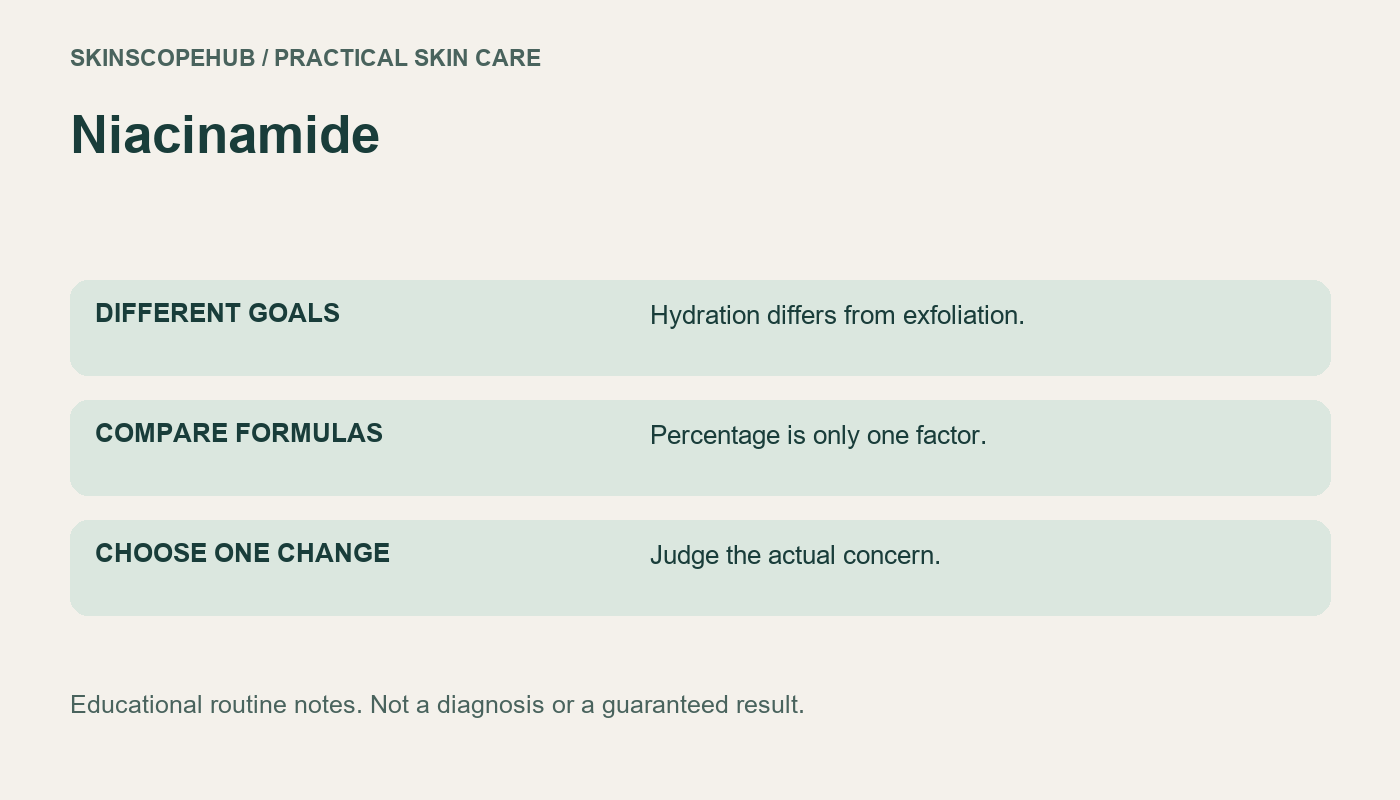
What each ingredient can do
DermNet’s nicotinamide overview discusses topical niacinamide, its role in skin care, and selected research. It can be included in moisturizers and other formulations addressing barrier function, oiliness, or the appearance of uneven tone. These uses do not make it a cure for every rash.
DermNet’s salicylic acid guidance describes its keratolytic action: softening keratin and loosening scaly material. Suitable facial products can help with blackheads and whiteheads. They can also cause irritation, especially with excessive or inappropriate use.
Both names can appear in cleansers, creams, or treatments. The complete formula, contact time, and instructions matter. Comparing ingredient names without identifying the bottles misses these practical differences.
6 simple ways to compare niacinamide and salicylic acid
1. Separate clogged pores from shine
If blackheads or whiteheads are the main concern, a suitable salicylic acid product may be useful. If your main concern is ordinary shine without significant congestion, an exfoliant is not automatically necessary. Gentle cleansing and a comfortable moisturizer may already meet your needs.
A study of a 2% niacinamide moisturizer assessed oil measurements in specific Japanese and US groups over four to six weeks. Different measures and groups did not produce identical findings. This does not establish that every serum stops oil production on a fixed deadline.
2. Review dryness and irritation first
If your face is burning, cracking, or peeling painfully, adding salicylic acid can worsen discomfort. A niacinamide product is not automatically the answer either: its other ingredients may irritate. Begin with familiar gentle care and seek advice for persistent symptoms.
Our skin barrier repair guide explains a modest routine. A cosmetic ingredient comparison cannot diagnose eczema, rosacea, contact dermatitis, or another cause of sensitivity.
3. Compare complete formulas
A niacinamide moisturizer can supply emollients and humectants alongside the ingredient. A salicylic cleanser is rinsed away. A leave-on treatment remains on skin. These are different exposures, so a percentage comparison alone cannot rank them.
Read the label for intended use, application area, contact time, and warnings. Do not substitute a body-area medicine or wart remover for a facial acne product because the active ingredient has a familiar name.
4. Distinguish cosmetic goals from acne treatment
Moisturizing, a less shiny appearance, and treatment of inflammatory acne are different goals. If acne is deep, painful, persistent, or causing scars, seek assessment. Neither a serum comparison nor a stronger exfoliant is a complete treatment plan.
The AAD acne guidance emphasizes gentle care and giving an appropriate product time to work. It also explains why scrubbing and frequent product switching can worsen the problem.
5. Check what you already use
Niacinamide may already be present in a comfortable moisturizer or sunscreen. A separate serum can add complexity without a new purpose. Check for salicylic acid in your cleanser before adding an acid toner or serum.
Review prescription acne treatments and other potentially irritating products too. Ask the prescriber before changing their schedule. Our salicylic acid layering guide explains overlapping exposure.
6. Choose a manageable trial
Introduce one suitable change while keeping familiar basics. Follow the label rather than assuming twice-daily use is necessary. Record comfort and whether the concern you selected is improving.
For product-introduction details, use our niacinamide routine guide or salicylic acid beginner guide. Stop a product causing persistent burning or a new rash rather than automatically calling it purging.
A practical comparison
| Question | Niacinamide | Salicylic acid |
|---|---|---|
| Main role discussed here | Ingredient in moisturizing and cosmetic formulas. | Keratolytic for suitable concerns such as clogged pores. |
| Does it replace moisturizer? | A serum does not necessarily do so. | No; treatment-related dryness may need moisturizing. |
| What matters beyond percentage? | Vehicle, other ingredients, and tolerance. | Format, contact time, area, and directions. |
| Is it essential? | No, a separate serum is optional. | No, choose for a clear suitable concern. |
Can you use both?
They can appear in finished combination products, and separate suitable products may fit some routines. That does not mean everyone needs both or that niacinamide cancels irritation from acid. Follow the actual instructions and avoid several new exposures at once.
Our combination guide discusses this question in more detail. Keep adequate sun protection and avoid aggressive scrubbing while reviewing any acne routine.
Common questions
Which ingredient is stronger?
They have different purposes, so a universal strength ranking is unhelpful. Choose a suitable product for your goal and judge tolerance.
Will either permanently shrink pores?
No. Pores are normal structures. Reducing congestion or oiliness may affect appearance, but cannot erase them.
What if my skin becomes red?
Stop the new exposure if redness accompanies persistent discomfort or a rash. Read our reaction guide. Significant swelling, blistering, severe pain, or eye involvement needs prompt assessment.
Sources and editorial basis
SkinScopeHub prepared this comparison from the linked DermNet, AAD, and research sources. We have not conducted a head-to-head product trial or obtained medical review of the article. See our medical disclaimer.