Salicylic acid is a keratolytic ingredient that helps loosen skin-cell buildup and can be useful for clogged pores such as blackheads and whiteheads. The right way to use it depends on the exact product and its directions. More exfoliation is not automatically better, and irritation is not a required sign of progress.
This guide explains the ingredient, product formats, evidence limits, and six practical decisions. Use the linked focused guides for beginner product selection, oily skin, layering, or routine monitoring.
What salicylic acid does
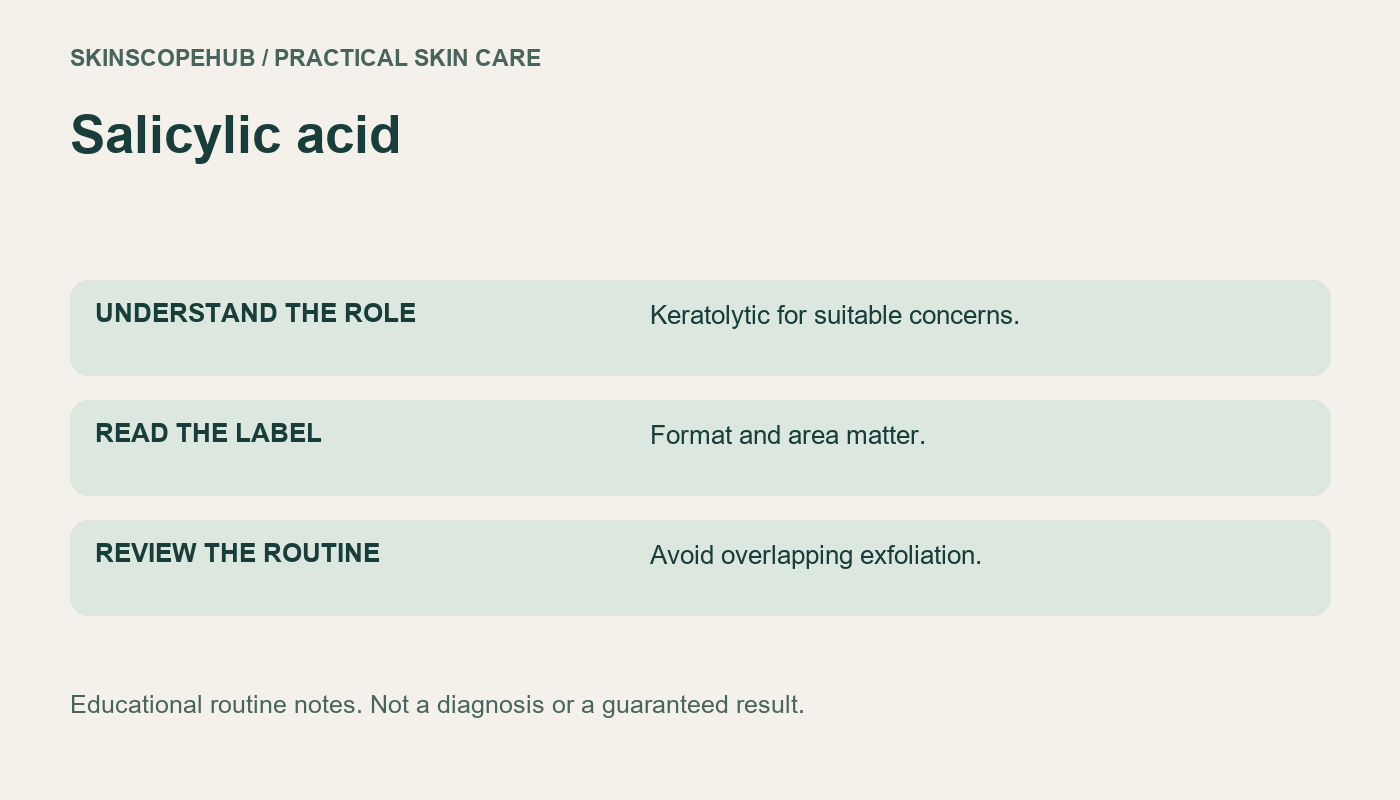
DermNet classifies salicylic acid as a keratolytic. It helps soften keratin and loosen scaly material. In appropriate acne products, it can help address the buildup involved in blocked follicles.
This is different from mechanically scrubbing the face or washing away surface sweat. You do not need a rough cloth, brush, or abrasive scrub to make it work. Those extra exposures may increase irritation.
The AAD visible-pore guidance discusses salicylic acid cleansers for clogged pores. Pores are normal structures and cannot be permanently erased by cleansing. Oiliness, skin firmness, and congestion can each affect their appearance.
6 decisions before using salicylic acid
1. Define the concern
Blackheads, whiteheads, inflamed acne, a rash, and rough dry skin are different problems. Salicylic acid is not a universal treatment for any bump. Deep painful lesions, scarring, or persistent acne can require another approach after assessment.
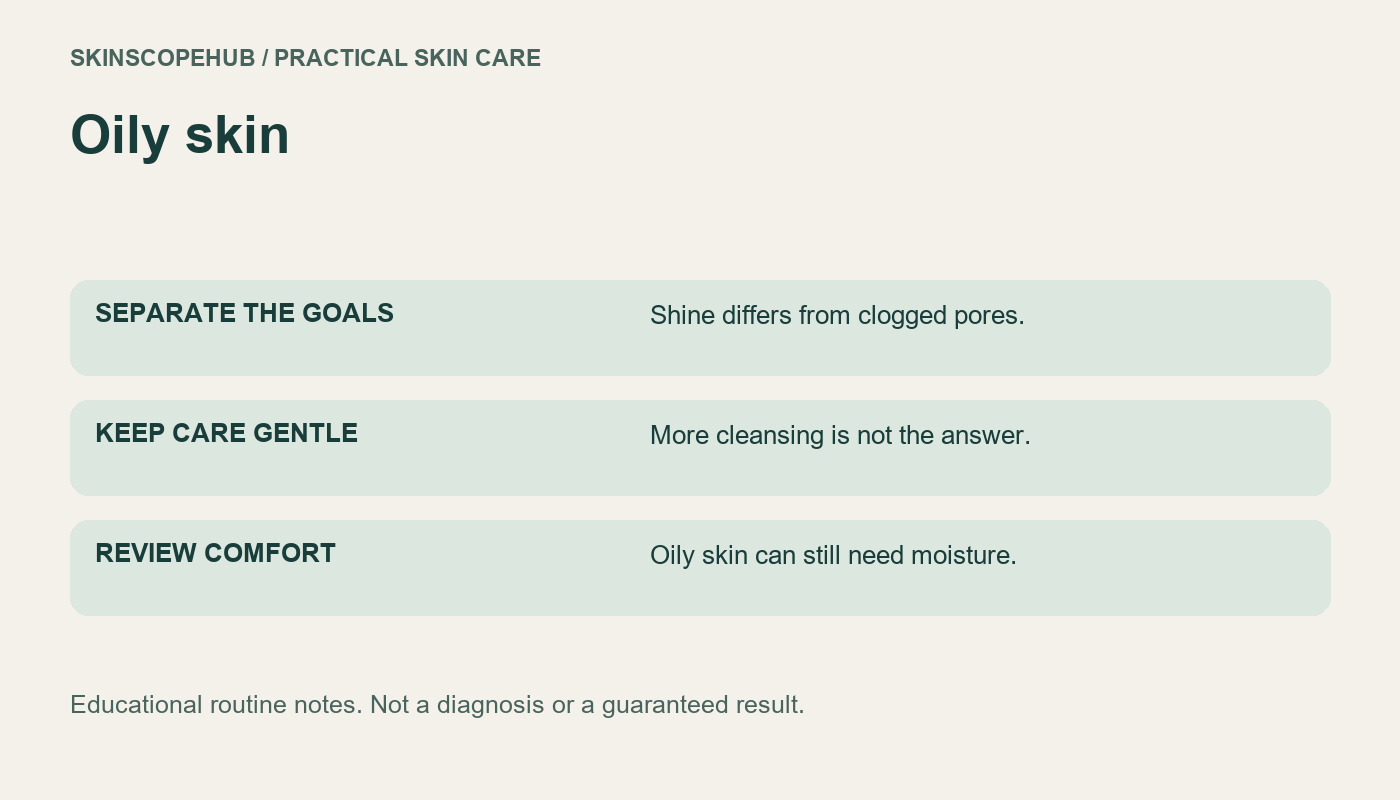
For a focused explanation of clogged pores, read our what salicylic acid does guide. If your main concern is shine, the oily skin routine guide distinguishes oiliness from acne and irritation.
2. Identify the product format
A rinse-off cleanser, leave-on serum, spot treatment, and medicine for warts or calluses have different intended uses. The ingredient name alone cannot tell you the safe area, amount, or contact time. Do not apply a wart remover to facial acne.
Read the local label, including warnings and age restrictions. Check the intended treatment area and whether it should be rinsed away. Similar packaging or an online percentage comparison does not override those directions.
3. Check current skin comfort
Avoid adding an exfoliating product to broken, already irritated skin. If your face is burning, scaling painfully, or covered by a new rash, adding acid makes the response harder to interpret. Start with familiar gentle care and seek advice when symptoms persist.
Our skin barrier repair guide explains a simpler routine. A serum should not be used to postpone assessment of a persistent skin condition.
4. Review existing active products
Check whether your cleanser, toner, or treatment already contains salicylic acid. Several low-strength products can still create overlapping exposure. Retinol, benzoyl peroxide, and other acne medicines also need their own directions and tolerance review.
A finished formula containing several ingredients is different from applying independent products together. Read our layering guide and ask your prescriber before changing a medicine schedule.
5. Choose a practical introduction
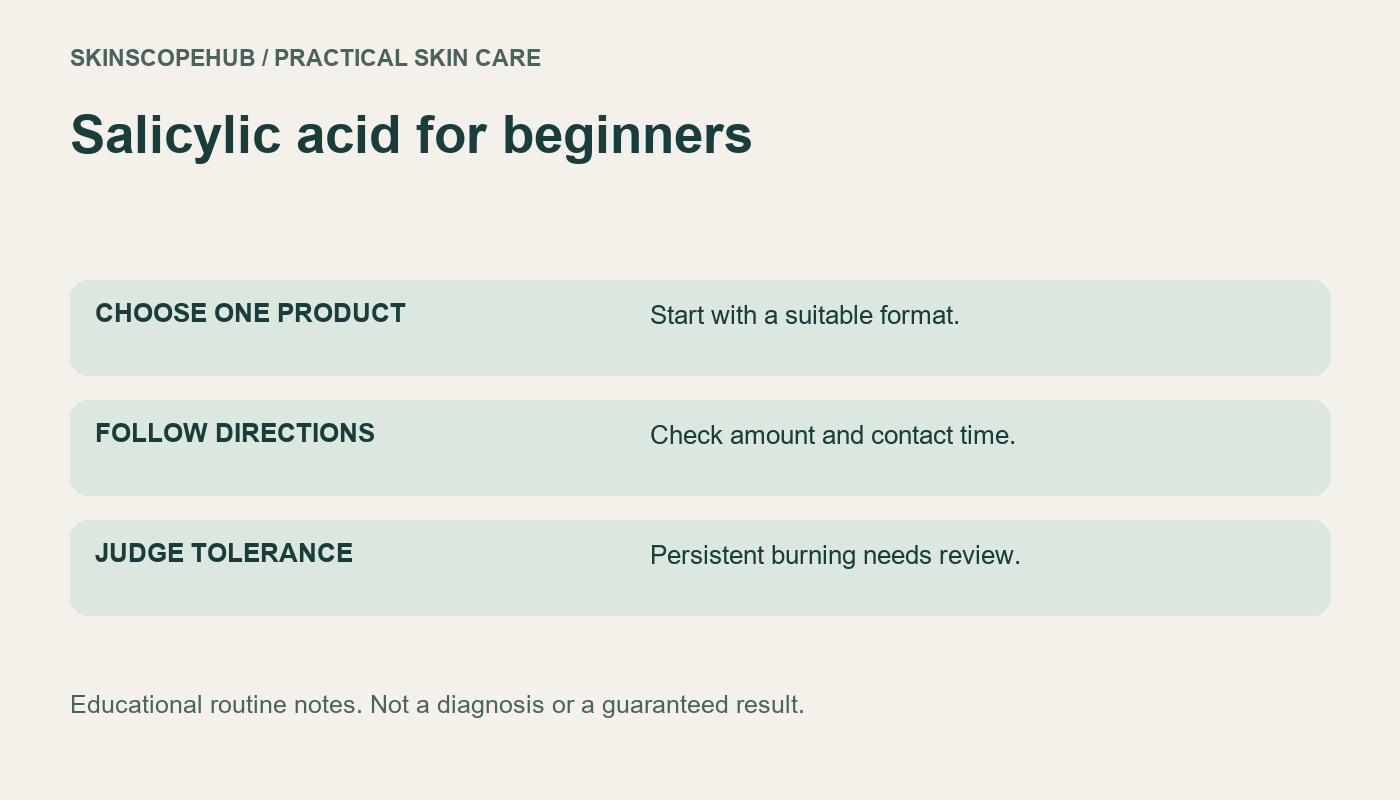
Use one suitable product within its directions while keeping familiar cleanser, moisturizer, and sunscreen. If the label allows a less frequent introduction, use that option to judge comfort. There is no universal twice-weekly starting rule for every formula.
Do not increase strength and frequency together because of a fixed calendar. Our beginner guide provides a first-product checklist and explains why format matters.
6. Set a review plan
Record the product, actual schedule, comfort, and acne trend. The AAD acne guidance advises allowing an appropriate acne product six to eight weeks for some improvement, with full clearing often taking longer. This is not a guarantee for every formula or permission to endure a rash.
Our routine progress guide separates early tolerance checks from later effectiveness review. Persistent deep lesions or scarring deserve clinical advice rather than stronger exfoliation.
A quick comparison of product formats
| Format | Key direction to check | Common mistake |
|---|---|---|
| Cleanser | Contact time and rinsing. | Leaving it on like a serum. |
| Leave-on facial treatment | Amount, intended area, and frequency. | Combining several exfoliating layers. |
| Spot product | Whether it is intended only for limited areas. | Automatically applying all over the face. |
| Wart or callus medicine | Specific condition and body area. | Using it as a facial acne treatment. |
What research cannot promise
Salicylic acid is an established keratolytic, but that does not prove every formula clears every acne type at the same rate. Concentration is only one variable. Delivery, amount, contact time, other treatments, and the underlying condition matter.
We do not assign a universal percentage of acne reduction or permanent pore shrinkage. A study of one preparation should be described with its actual population and outcomes, rather than transferred to all bottles sharing the ingredient.
When considering other ingredients, our niacinamide comparison explains their different roles. Adding both is optional and cannot substitute for diagnosis.
When to ask for advice
Ask a clinician or pharmacist about the exact product if you are pregnant, breastfeeding, treating a child, using prescriptions, or considering extensive application. Avoid known allergens and follow warnings about damaged skin or sensitive areas.
Stop a new product causing persistent burning or a rash. Seek prompt care for significant swelling, blistering, severe pain, or eye involvement. Breathing difficulty or swelling of the lips, tongue, or throat needs emergency help.
Common questions
Does it dissolve all facial oil?
No. Its useful keratolytic role does not mean it permanently switches off oil production or eliminates the need for ordinary gentle cleansing.
Can I use it every day?
Only as appropriate for the product, label, and your tolerance. Daily use is not a necessary goal. Do not escalate simply because another person’s routine uses it more often.
Are new spots always purging?
No. Read our purging and irritation guide and seek advice for a worsening or unfamiliar eruption.
Sources and editorial basis
SkinScopeHub prepared this ingredient overview using the linked DermNet and AAD guidance. No product trials, clinical outcomes, or medical review of this article are claimed. See our medical disclaimer.