Salicylic acid for large pores may help when clogged pores contribute to their appearance. It cannot permanently close pores or treat every cause of visible texture. A gentle routine and sun protection are useful alongside any appropriate acne treatment.
Before buying a stronger exfoliant, check whether you see blackheads, ordinary visible follicles, or a different skin change. This guide covers seven decisions that make pore care more practical and explains when professional assessment is useful.
Why pores look more noticeable
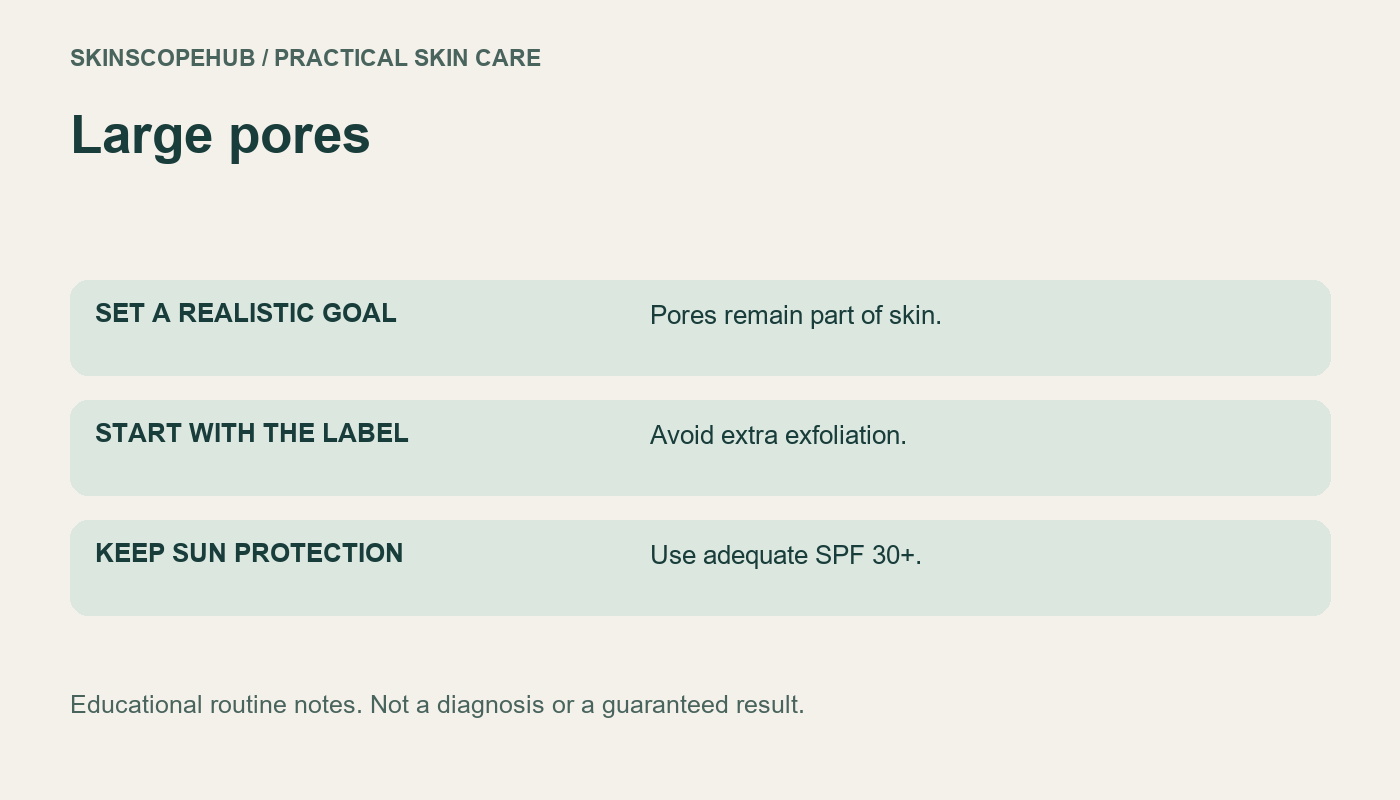
Pores are normal openings in the skin. Congestion and oiliness can make them stand out, while loss of firmness and sun damage can also affect their appearance. Your face does not need to look poreless to be healthy.
The AAD’s large-pore guidance recommends gentle cleansing, non-comedogenic products, treating acne when present, and daily sunscreen. It also explains why scrubbing, picking, and irritation can make pores more noticeable.
7 checks before using salicylic acid for large pores
1. Identify the concern you can describe
Note whether you have blackheads, whiteheads, inflamed spots, or visible openings without acne. Similar-looking marks can have different explanations. Avoid trying to diagnose a new or changing lesion from a magnified mirror.
If your main concern is normal texture, repeated acid use may add irritation without producing the poreless finish shown in edited photographs. Compare skin in ordinary, consistent lighting instead.
2. Understand what the ingredient can do
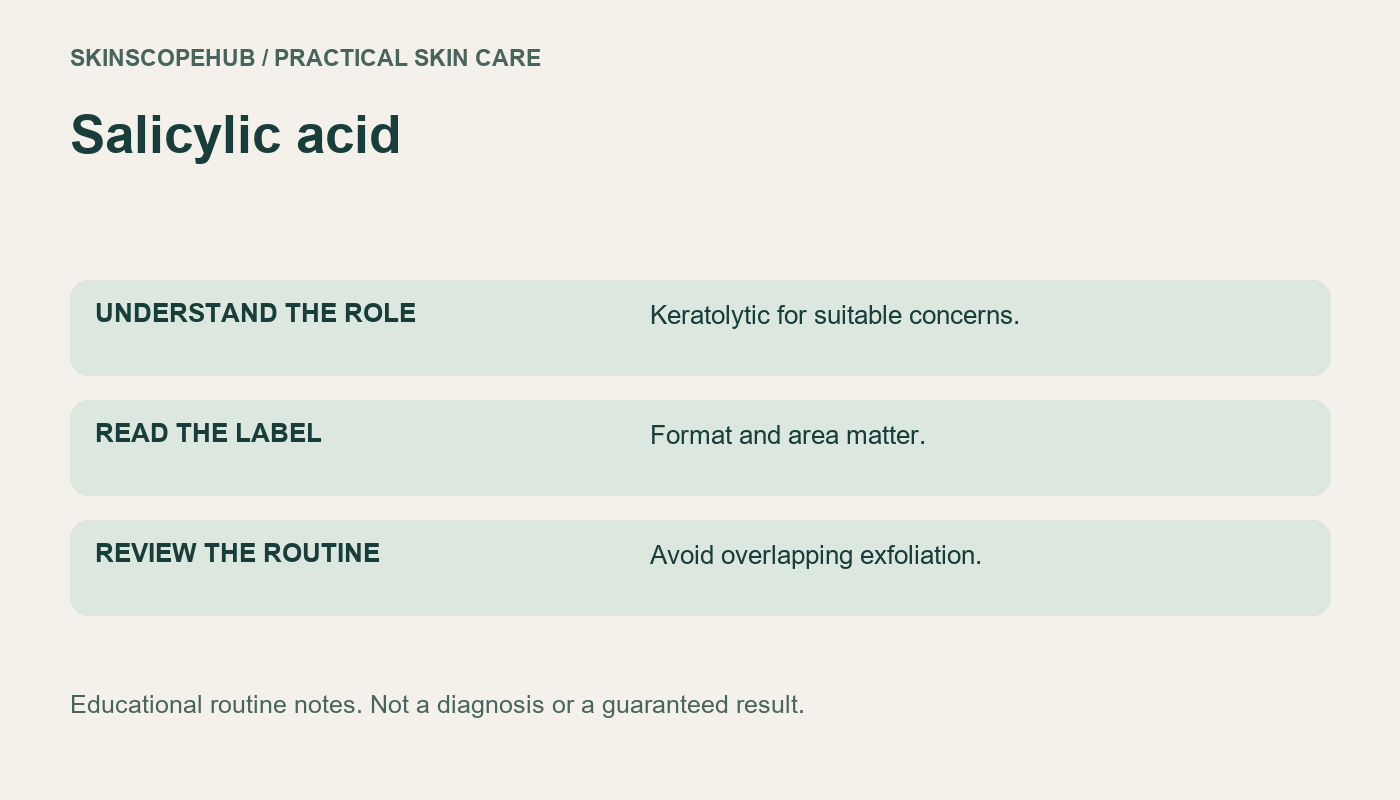
DermNet explains salicylic acid’s keratolytic action and its role in blackheads and whiteheads. Helping congestion can improve appearance, but it does not remove normal follicles or reverse every structural cause of larger-looking pores.
Do not treat a transient smooth feeling after exfoliation as proof of permanent shrinkage. There is no universal percentage reduction or fixed number of days that predicts your result.
3. Choose a facial formula, not simply a strength
Use a product intended for facial acne or skin care, following its directions. Wart and corn preparations can contain much higher concentrations and are not substitutes for facial treatments. A rinse-off cleanser and a leave-on toner are different exposures.
Check the complete formula, including fragrance and other exfoliants. Our salicylic acid beginner guide explains how to introduce one suitable product while keeping the routine understandable.
4. Avoid doubling up on exfoliation
A cleanser, acid toner, scrub, and retinoid can create a considerable combined exposure. Adding each step for the same pore concern may make the skin sore. Follow medicine instructions and ask about combinations with other acne treatments.
Layering order does not remove irritation risk. When using salicylic acid for large pores, judge the whole routine rather than assuming a moisturizer can compensate for unlimited exfoliation.
5. Keep cleansing gentle
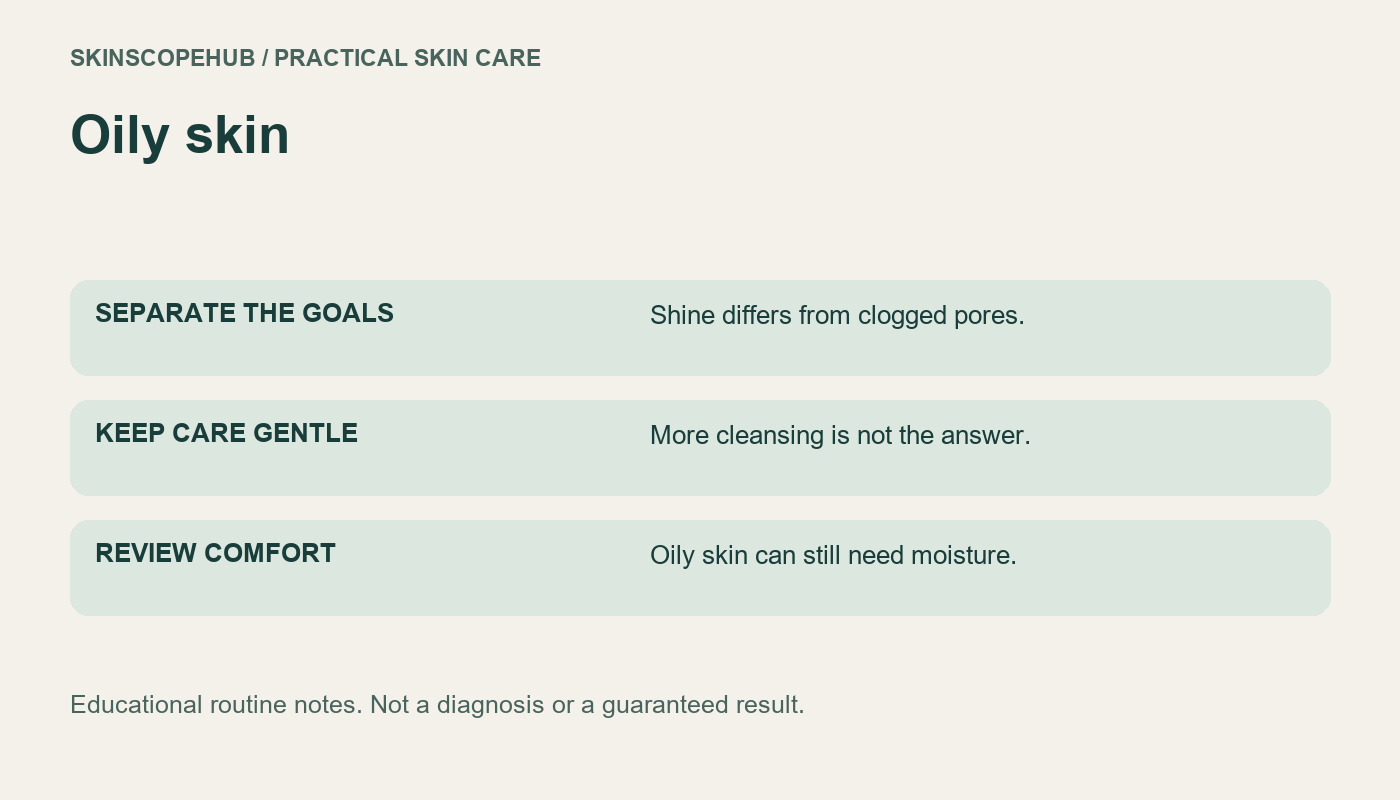
Use comfortably warm water and fingertips. The AAD advises cleansing twice daily and avoiding scrubbing. If a salicylic cleanser dries or irritates the skin, its guidance suggests considering a gentle cleanser at another wash rather than insisting on acid at every cleansing step.
A tight feeling is not a reliable measure of pore cleanliness. Avoid hot water, rough washcloths, and repeated washing to remove every trace of shine. Oily skin can still be irritated or dehydrated.
6. Protect against sun damage
Use broad-spectrum, water-resistant SPF 30 or higher as directed. Sun damage can contribute to loss of firmness, which affects visible pores. A product labeled non-comedogenic can be a sensible choice when congestion is a concern.
Do not apply less sunscreen to reduce its feel on the skin. Compare suitable textures instead; our face sunscreen guide covers what to look for.
7. Review tolerance and the trend
Track comfort, new clogged pores, and overall texture in similar lighting. Do not examine the face several times a day with strong magnification. That makes small normal differences appear more important than they are.
Stop a new nonprescription product that causes persistent burning or a rash. If the basic routine is uncomfortable, use the skin barrier repair guide as background while seeking advice for ongoing symptoms.
A simple routine to discuss or adapt
| Step | Practical approach |
|---|---|
| Cleanse | Use a gentle cleanser; use an appropriate salicylic product only as directed and tolerated. |
| Moisturize | Choose a comfortable texture rather than removing hydration because the face is oily. |
| Protect | Apply adequate SPF 30+ in the morning and reapply according to the label. |
| Review | Check congestion and comfort over time; avoid escalating several actives together. |
This example is not a treatment prescription. If you have eczema, rosacea, a known allergy, or another diagnosed condition, ask about suitable products. DermNet also advises discussing use during pregnancy or breastfeeding and taking care with preparations intended for children.
When a dermatologist can help
If you have deep painful lesions, scars, persistent acne, or a texture concern related to loss of firmness, a dermatologist can assess the cause and discuss options. Do not substitute a stronger home peel for that assessment.
Seek prompt care for significant swelling, blistering, severe pain, or a spreading rash. Eye exposure and symptoms around the eyes need attention. Breathing difficulty or swelling of the lips, tongue, or throat requires emergency help.
Questions about salicylic acid for large pores
Can cold water close my pores?
Water temperature does not permanently close normal follicles. Use comfortably warm water; extremes of temperature and repeated rubbing can add irritation.
Should I squeeze blackheads before applying it?
No. Picking can inflame the skin and increase the risk of marks or scars. Use an appropriate treatment as directed and discuss stubborn congestion with a clinician.
Will results last if I stop?
Congestion can return, and normal visible pores remain. A sustainable routine is more useful than promises of a permanent pore-removal result.
Is stronger acid always more effective?
No. Strength, format, and tolerance all matter. A harsher product can produce irritation without meeting your goal.
Sources and editorial basis
Updated by SkinScopeHub using the linked AAD and DermNet guidance. The routine is an educational example, and no clinical testing or medical review of this article is claimed. See our medical disclaimer.