
Does sunscreen cause acne? This is one of the most common questions individuals with oily, combination, or acne-prone skin ask every single day. You try your best to maintain a flawless skincare routine, only to find a cluster of fresh breakouts appearing right after you start practicing daily sun protection. It is a frustrating paradox: you want to protect your skin from premature aging and skin cancer, but you do not want to sacrifice your skin clarity in the process.
The short answer might surprise you: Sunscreen itself does not cause acne. The actual active ingredients that shield your skin from harmful ultraviolet (UV) radiation are rarely the culprits behind your clogged pores. Instead, the real offenders are the supporting ingredients hiding within the formula—heavy carrier oils, thick emollients, synthetic fragrances, and highly occlusive bases.
If you have ever wondered whether your daily SPF is making your breakouts worse, this comprehensive, science-backed guide will provide the full picture. We will dive deep into the biological mechanisms of sunscreen-related breakouts, identify the specific pore-clogging ingredients you must avoid, compare mineral versus chemical filters, and provide a foolproof blueprint to keep your skin protected, radiant, and completely clear.
Does Sunscreen Cause Acne? The Real Science Explained
To understand why breakouts happen, we need to separate the UV filters from the cosmetic vehicle they are delivered in. The active chemical or mineral agents responsible for absorbing or reflecting sun rays—such as zinc oxide, titanium dioxide, avobenzone, and octisalate—are inherently non-comedogenic. They do not possess the chemical properties required to lodge themselves inside human sebaceous glands and form microcomedones (the precursors to pimples).
According to the official clinical guidelines provided by the American Academy of Dermatology (AAD) (Link: https://www.aad.org/public/diseases/acne/skincare/sunscreen), daily application of sunscreen is not only safe for acne patients, but it is actively recommended. The AAD emphasizes that UV exposure causes cellular stress that can accelerate inflammatory acne pathways and significantly worsen post-acne dark spots.
So, why do so many people experience a noticeable flare-up after applying a standard sunscreen? The answer lies in the cosmetic formulation. Sunscreens require emulsifiers, preservatives, texture enhancers, and waterproofing agents to make them smooth, spreadable, and stable under intense heat. In traditional formulations, these additives often include heavy lipids, synthetic fatty acid derivatives, and artificial fragrances that form a suffocating layer over the skin, trapping oil, dead cells, and bacteria inside the follicle.
Why Some Sunscreens Break You Out — 4 Biological Mechanisms
Sunscreen-induced acne does not happen in just one way. Depending on your skin type and the specific product you use, breakouts can be triggered by four completely distinct biological mechanisms:
1. Mechanical Occlusion and Comedogenicity
The most frequent cause of SPF breakouts is mechanical occlusion. Many sunscreens, particularly those labeled as “nourishing,” “hydrating,” or “water-resistant,” utilize heavy botanical oils and synthetic emollients to ensure the product adheres firmly to the skin. Ingredients like coconut oil, cocoa butter, and isopropyl myristate have high comedogenic ratings. When applied to oily skin, they mix with your natural sebum, turning your liquid pore output into a thick, waxy plug. This plug completely seals the oxygen-deprived environment of the pore, creating the perfect breeding ground for acne bacteria.
2. Chemical Filter Heat Generation and Sweat Trapping
Chemical sunscreens function by penetrating the upper layers of the epidermis, absorbing UV radiation, and converting that radiation into thermal energy (heat), which is then released from the body. While this process effectively prevents sunburn, the localized heat generation acts as a micro-occlusion on the skin’s surface. This elevated skin temperature triggers an increase in localized sweat and sebum production. When mixed with chemical filters like oxybenzone or homosalate, the trapped sweat and sebum cause intense follicular irritation. If you notice your skin flaring up drastically during outdoor summer activities, check out our guide on why skin breaks out more in summer heat (Link: https://www.skinscopehub.com/summer-acne-heat-triggers) to counteract this exact thermal trigger.
3. Fragrance-Induced Contact Dermatitis Mimicking Acne
Synthetic fragrances and artificial essential oils are the number one cause of allergic cosmetic contact dermatitis. Even if a fragrant sunscreen does not mechanically clog your pores, the volatile aromatic compounds can compromise your skin’s delicate moisture barrier. This micro-irritation initiates a localized inflammatory cascade. Your immune system releases histamine and inflammatory cytokines, resulting in clusters of tiny, red, itchy bumps. While these bumps look almost identical to inflammatory papules or acne, they are actually an allergic reaction. Removing fragrance from your SPF routine can eliminate these deceptive “breakouts” overnight.
4. Cumulative Evening Sebum Buildup
Even if you find a perfectly lightweight, 100% non-comedogenic sunscreen, it can still cause severe acne if it is not removed correctly before bed. High-performance UV filters—especially water-resistant and sweat-resistant options—are formulated to cross-link and bond tightly to the skin structure so they do not slide off during the day. A standard, gentle water-based face wash simply cannot break down this resilient chemical matrix. If you sleep with sunscreen residue on your face, it will blend with eight hours of nocturnal sebum and dead skin cells. This makes a meticulous cleansing method absolutely critical for any daily SPF user.
The Ultimate Paradox: Why Skipping Sunscreen Makes Your Acne Worse
When dealing with a frustrating breakout, your first instinct might be to stop applying everything and let your skin “breathe.” However, skipping sunscreen is one of the worst mistakes you can make for long-term acne management. Unprotected UV exposure actively damages acne-prone skin in three devastating ways:
- It Darkens Post-Inflammatory Hyperpigmentation (PIH): When a pimple heals, it leaves behind a red, purple, or brown mark known as PIH. UV rays stimulate melanocytes to overproduce melanin exactly where the skin is healing. This causes temporary acne marks to turn into dark, stubborn scars that can take over a year to fade.
- It Triggers Compensatory Oil Production: Solar radiation severely degrades the lipid matrix of your skin barrier, leading to rapid transepidermal water loss (TEWL). When your skin senses it is becoming dangerously dehydrated, its natural defense mechanism kicks in: your sebaceous glands go into overdrive, producing a massive surge of excess oil to seal in moisture, leading to a vicious cycle of more clogged pores.
- It Creates a False Illusion of Healing: Sunlight does have a very brief, mild immunosuppressive and anti-inflammatory effect, which can temporarily dry up active pimples and disguise facial redness with a tan. However, medical experts warn that this short-term improvement is a trap. The underlying UV radiation causes cellular mutation and hyperkeratosis (the thickening of the outer skin layer), which guarantees a massive breakout storm a few weeks down the line.
Furthermore, if you are actively treating your skin with standard dermatological topicals, skipping SPF is simply not an option. Highly effective acne-fighting ingredients like salicylic acid, glycolic acid, retinol, and benzoyl peroxide accelerate cellular turnover and thin out the protective dead-cell layer of your skin. This process makes your face highly photosensitive. Applying these actives at night without protecting your skin with a broad-spectrum shield during the day will lead to severe redness and accelerated damage. To learn how to integrate these powerful ingredients safely, read our definitive strategy on using niacinamide and salicylic acid together (Link: https://www.skinscopehub.com/niacinamide-salicylic-acid-guide).
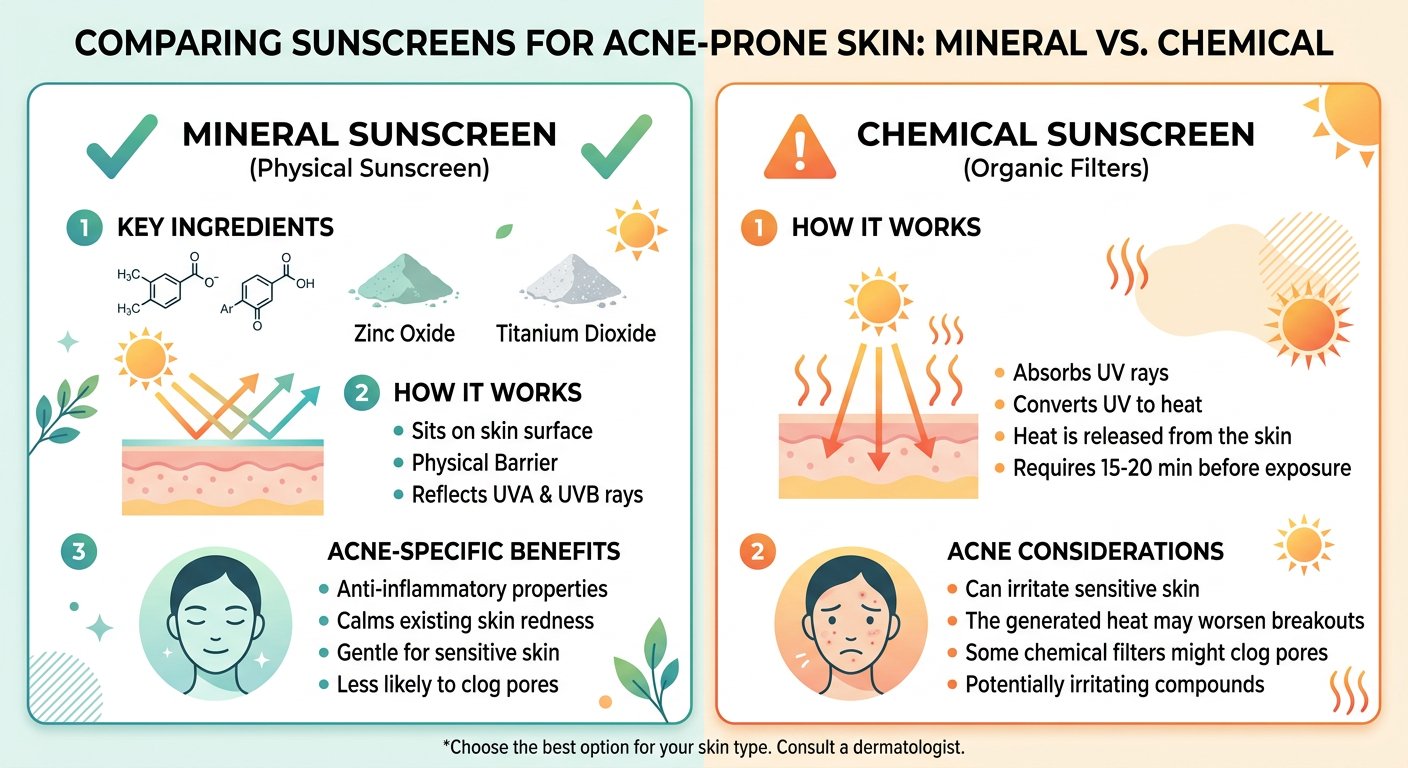
Mineral vs. Chemical Sunscreen: Which One Wins for Acne?
If you are prone to frequent breakouts, selecting the right category of UV protection is paramount. Sunscreens are strictly divided into two distinct groups based on their active mechanisms: mineral (physical) and chemical blockers. Let’s look at how they stack up directly in our clinical comparison matrix:
| Feature / Metric | Mineral (Physical) Sunscreen | Chemical Sunscreen |
| Active Ingredients | Zinc Oxide, Titanium Dioxide | Avobenzone, Octisalate, Homosalate, Octocrylene |
| Mechanism of Action | Sits on top of the skin; reflects and scatters UV rays | Absorbs into the upper epidermis; converts UV into heat |
| Pore-Clogging Risk | Extremely Low (Inert molecules stay surface-bound) | Moderate (Depends heavily on the chemical base) |
| Skin Irritation Index | Virtually zero; highly recommended for sensitive skin | Low to High (Certain older filters can trigger stinging) |
| Added Skin Benefits | Zinc oxide acts as a natural anti-inflammatory agent | Often provides a completely invisible, weightless finish |
A rigorous clinical trial published in the database of the National Center for Biotechnology Information (NCBI) (Link: https://www.ncbi.nlm.nih.gov/pmc/) monitored acne patients utilizing a specialized zinc-based SPF 30 formula. Over a 12-week observational period, the participants experienced a statistically significant 20% reduction in active inflammatory acne lesions. This occurred because zinc oxide is not just a highly effective UV blocker; it is also a well-documented skin protectant that helps soothe redness, reduce surface irritation, and gently regulate baseline sebum production.
For individuals dealing with active breakouts, a pure, zinc-based mineral sunscreen is always the safest and most reliable starting point. However, chemical sunscreens should not be entirely disregarded. Modern, premium chemical filters formulated without outdated compounds like oxybenzone or added synthetic perfumes can offer an incredibly lightweight, watery application that feels completely weightless on oily skin. The ultimate deciding factor is always the overall formulation, not just the type of filter used. For a detailed breakdown of how to scale your protection levels without overloading your skin barrier, check out our comparative SPF 30 vs 50 guide (Link: https://www.skinscopehub.com/spf-30-vs-50-guide).
Sunscreen Ingredients to Avoid vs. Ingredients to Look For
When shopping for a daily sunscreen, do not let flashy marketing claims on the front of the bottle mislead you. Turn the packaging over and audit the ingredient list for these specific compounds:
🛑 The Acne Rogue List (High Comedogenic Rating)
- Isopropyl Myristate & Isopropyl Palmitate: These synthetic fatty acid esters are utilized to give skincare products a slick, luxurious feel, but they have an incredibly high pore-clogging rating and can cause rapid pimple formation.
- Coconut Oil & Cocoa Butter: Highly occlusive natural lipids that are wonderful for dry body skin, but act as an immediate pore-sealing adhesive when applied to acne-prone facial skin.
- Lanolin Alcohol & Acetylated Lanolin: Derived from sheep’s wool, these heavy wax-like compounds can easily trap sebum deep within the hair follicle.
- Synthetic Fragrances (“Parfum”): Hidden blends of volatile chemicals that frequently trigger hidden inflammatory acne pathways and redness.
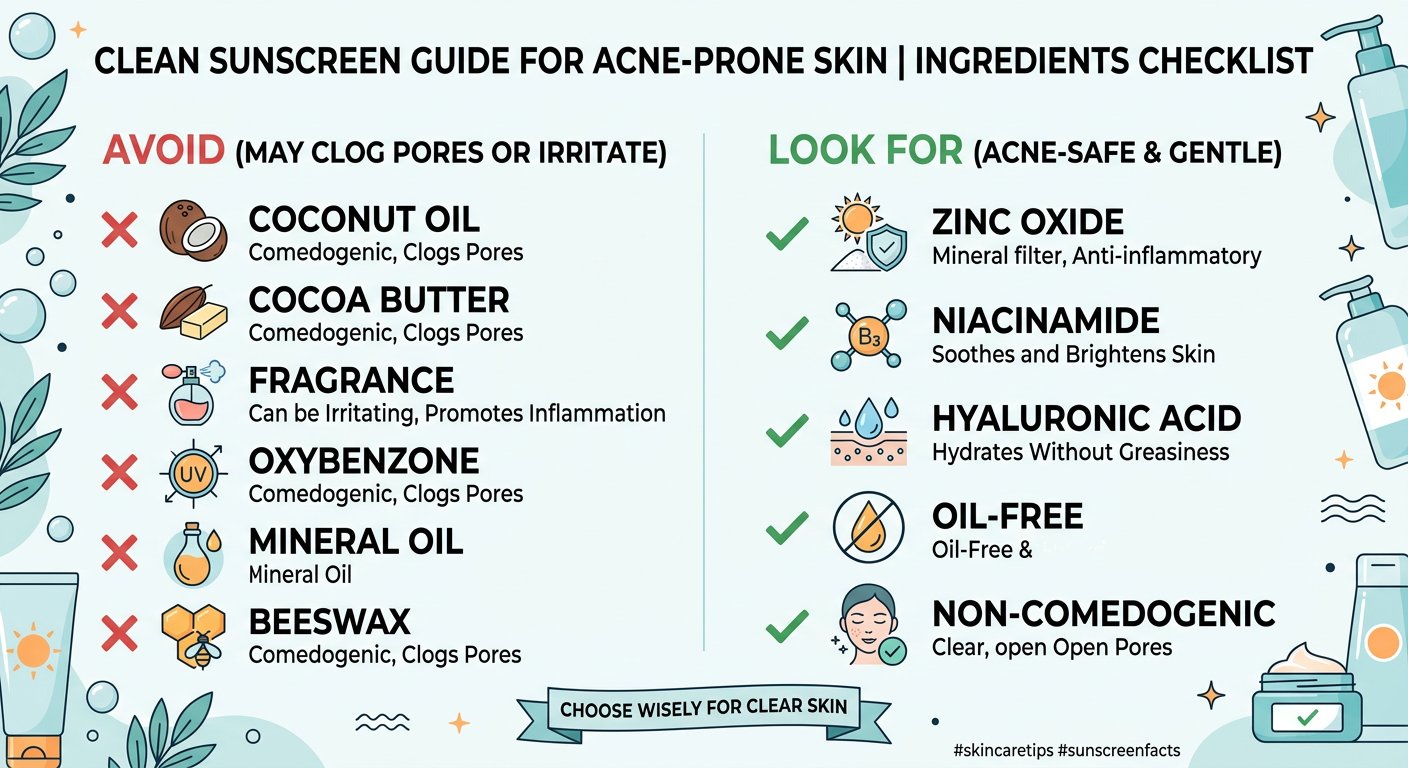
✅ The Acne-Safe Holy Grail List
- Zinc Oxide: A soothing, natural mineral block that shields against both UVA and UVB rays while calming active breakouts.
- Niacinamide (Vitamin B3): A clinical powerhouse that actively reduces excess surface oil production, repairs a compromised skin barrier, and accelerates the fading of post-acne dark marks.
- Hyaluronic Acid & Glycerin: Lightweight, non-oily humectants that draw moisture deep into the skin cells without adding any heavy lipid weight.
- Silica, Perlite, & Cornstarch: Natural, ultra-fine mattifying minerals that physically absorb excess facial oils throughout the day, providing a clean, matte finish.
How to Wear Sunscreen Without Breaking Out — 5 Golden Rules
Choosing an acne-safe product is only half the battle; how you apply and remove that product dictates your ultimate success. Follow these five absolute rules to keep your complexion clear:
- Rule 1: Always Use a Face-Specific Formulation. Never use a generic bottle of body sunscreen on your face. Body sunscreens are formulated to be thick, highly water-resistant, and incredibly rich to coat dry limbs. They are not designed to match the delicate pore density and high sebaceous activity of your facial skin. Always select a dedicated face fluid or gel.
- Rule 2: Never Apply SPF Over Sweat or Residual Makeup. Applying sunscreen over skin that has been sweating or still holds leftover cosmetics from hours prior creates an airtight seal that traps bacteria directly against your skin. Always wash your face or use a clean, damp cloth to remove surface grime before applying or reapplying your protective layer.
- Rule 3: Respect the Two-Finger Application Standard. To achieve the actual SPF level listed on your bottle, you must apply approximately two full finger-lengths of sunscreen to your face and neck combined. Under-applying leaves your skin vulnerable to micro-sunburns that trigger inflammation. If the required amount feels too heavy, you are using the wrong product vehicle and need to transition to lighter gel and fluid textures (Link: https://www.skinscopehub.com/skincare-textures-guide).
- Rule 4: Utilize SPF Powders or Minerals for Touch-Ups. Reapplying a traditional, thick sunscreen lotion every two hours over existing midday facial oil is a guaranteed recipe for a breakout storm. Instead, look into oil-absorbing mineral sunscreen powders or lightweight SPF sticks. These allow you to refresh your UV shield while simultaneously absorbing excess oil and creating a fresh matte finish.
- Rule 5: Master the Nightly Double Cleanse. This is the absolute, non-negotiable step for anyone wearing sunscreen daily. To properly clear your pores at night, adopt a two-step routine: first, use a lightweight, emulsifying oil cleanser or micellar water to break down the water-resistant silicone and lipid matrix of your sunscreen. Follow up immediately with a gentle, water-based foaming cleanser to wash away the dissolved residue, dirt, and bacteria completely. Skipping this single evening habit is the number one hidden cause of sunscreen-related breakouts.
FAQ: Frequently Asked Questions About Sunscreen and Acne
Q: Does sunscreen cause acne directly?
A: No, it does not. The primary UV filters used to protect your skin are entirely non-comedogenic. Breakouts occur due to heavy carrier emollient bases, synthetic thickeners, and fragrances that are added to the formula.
Q: Does sunscreen cause acne if I have oily skin?
A: Only if you use a formula designed for dry skin types. If you choose an oil-free, fluid-based, matte-finish sunscreen specifically tailored for high-sebum complexions, it will not trigger breakouts.
Q: Is mineral or chemical sunscreen better for acne?
A: Mineral sunscreen containing zinc oxide is generally the superior choice for active acne because zinc acts as a natural anti-inflammatory agent that calms irritation. However, ultra-light chemical sunscreens that are fragrance-free can also be an excellent choice if you prefer a completely invisible finish.
Q: Does sunscreen cause acne if I leave it on overnight?
A: Yes, absolutely. Sunscreen formulas bond firmly to the epidermis. Leaving them on during sleep creates a dense barrier that traps sebum and dead skin cells, causing severe pore blockages by morning.
Q: Can sunscreen help fade my existing acne scars?
A: Yes. Daily application of a broad-spectrum sunscreen prevents UV rays from stimulating excess melanin production in healing skin. This helps post-acne marks and dark spots fade significantly faster.
Q: What SPF rating should I choose for breakout-prone skin?
A: A minimum rating of SPF 30 is required for daily protection, while SPF 50 is ideal for extended outdoor exposure. Focus less on the exact number and more on ensuring the label reads “non-comedogenic” and “oil-free.”
Conclusion: Your Final Blueprint for Clear, Sun-Protected Skin
Protecting your face from aging and sun damage should never mean compromising on skin clarity. By avoiding notorious pore-clogging oils, transitioning toward soothing mineral zinc filters, and committing to a thorough nightly double cleanse, you can break free from the frustrating cycle of sunscreen breakouts forever.
Ready to upgrade your daily sun protection routine with an acne-safe option? Explore our expert-curated, dermatologist-vetted recommendations in our comprehensive best sunscreen for face 2026 guide (Link: https://www.skinscopehub.com/best-sunscreen-face-2026-guide) and find your perfect skincare match today.
Disclosure: SkinScopeHub is reader-supported. When you purchase through links on our site, we may earn an affiliate commission at absolutely no extra cost to you.