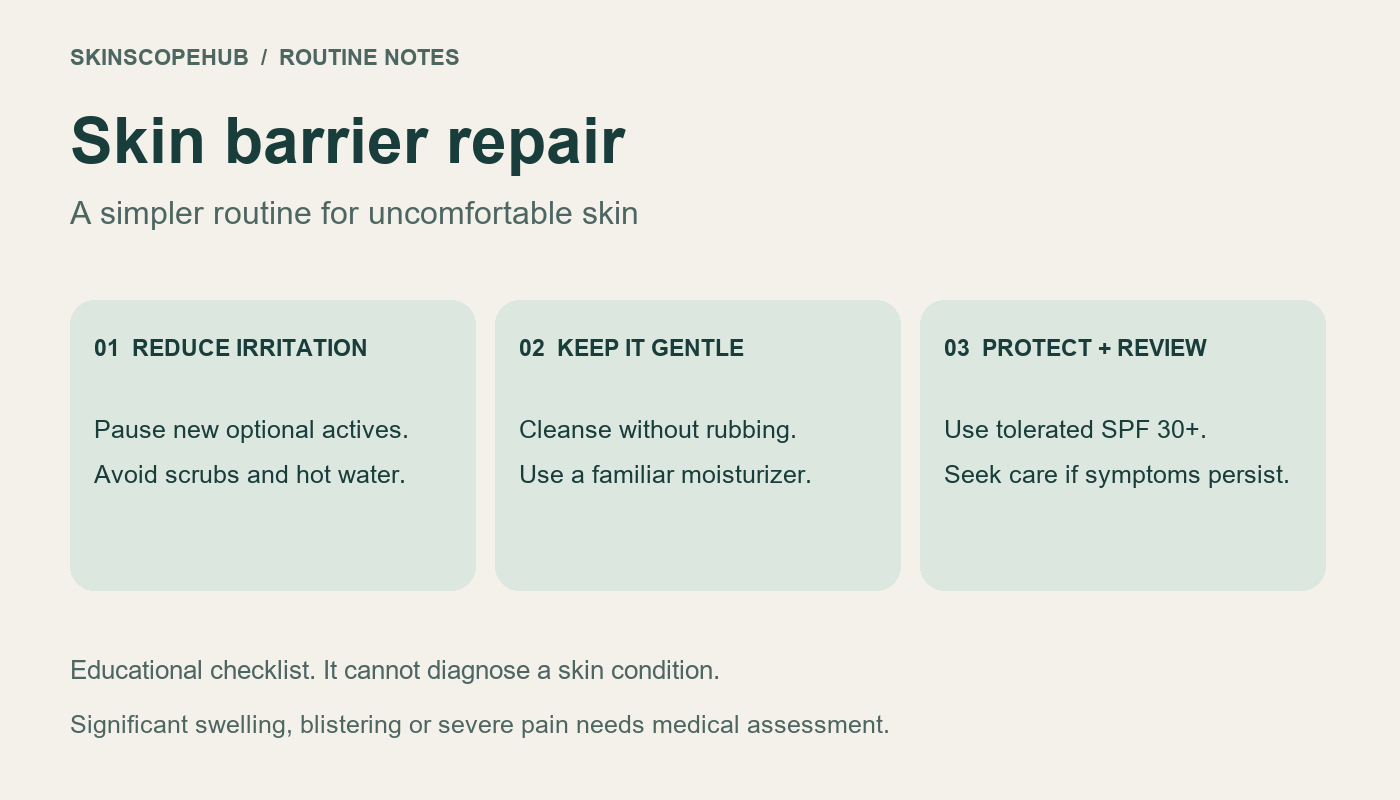
Skin barrier repair starts with reducing irritation, cleansing gently, and using a moisturizer you already tolerate. If your face suddenly feels tight, flaky, or stingy after adding exfoliants or retinol, pause the new nonprescription products and simplify your routine. Adding several “repair” serums at once makes it harder to identify the trigger.
A damaged-feeling barrier is a description, not a diagnosis. Eczema, contact dermatitis, rosacea, and other conditions can produce similar symptoms. This guide explains a practical routine for mild irritation, how to choose products, and when home care is no longer enough.
Prepared by SkinScopeHub using the American Academy of Dermatology and DermNet guidance cited below. This is general education, not a medical diagnosis or an individually prescribed treatment.
What your skin barrier does, and what can disrupt it
The outer layer of skin helps keep water in and limits contact with irritants. Its cells, lipids, and natural moisturizing factors work together. DermNet explains that repeated exposure to soaps, detergents, friction, or irritating ingredients can damage this protection and contribute to irritant contact dermatitis.
That does not mean every dry patch needs a complex lipid ratio or an expensive serum. For everyday product-related irritation, the useful questions are simple: what changed, which products now sting, and can you reduce the number of exposures while maintaining comfortable cleansing and hydration?
Common warning signs include tightness after washing, flaky areas, increased sensitivity to familiar products, and burning. Visible changes can look pink or red on lighter skin, or appear darker, purple, grey, or otherwise different from your usual tone on deeper skin tones. Symptoms alone cannot confirm their cause.
7 gentle skin barrier repair steps
1. Remove the newest potential irritant
Think back to changes in the days before symptoms began: a stronger exfoliant, daily retinol, a cleansing brush, fragranced products, or a new combination of actives. Stop the new nonprescription product first. Keep its name and ingredient list so you can discuss a repeat reaction with a clinician.
If a prescribed treatment seems responsible, contact the prescriber for instructions about frequency or formulation. Do not replace a treatment for a diagnosed condition with advice from an ingredient guide. Sudden swelling, blistering, or a severe rash deserves prompt medical assessment.
2. Pause exfoliation while your skin is uncomfortable
Scrubs, peels, exfoliating acids, and retinoids can add irritation when skin already burns or flakes. Temporarily remove optional actives from the affected area. A sting is not proof that an ingredient is working, and applying a second acid will not correct the reaction caused by the first.
This includes salicylic acid if it is contributing to discomfort. Our salicylic acid beginner guide covers its role in an established routine; an irritated face is not the right setting to increase exfoliation.
3. Cleanse with warm water and a gentle cleanser
Use comfortably warm water, fingertips, and a gentle cleanser that you tolerate. Avoid hot water, prolonged washing, and vigorous rubbing with a towel. Cleanse enough to remove sunscreen, makeup, sweat, and dirt without chasing a squeaky-clean feeling.
The AAD dry skin guidance recommends gentle cleansing and patting skin dry. An elaborate double cleanse is optional; it is not a requirement for skin barrier repair if one suitable cleanser removes your products comfortably.
4. Apply a familiar, fragrance-free moisturizer
Apply moisturizer after cleansing while skin is still slightly damp, if that feels comfortable. A cream often works better than a light lotion for very dry areas. Reapply when dryness returns. Start with a product you have previously used without a reaction rather than buying an entire repair range.
If even a simple moisturizer causes persistent burning, stop trying multiple replacements in the same day and seek advice. “Sensitive skin” on a label is not a guarantee that a formula suits you. The whole ingredient list and your experience matter more than a front-label claim.
5. Protect your skin from sunlight
Continue sun protection with a broad-spectrum, water-resistant SPF 30 or higher that you tolerate. Shade, a hat, and protective clothing reduce exposure as well. If sunscreen consistently stings, ask a dermatologist or pharmacist about a suitable alternative instead of deliberately testing several on inflamed skin.
Mineral and chemical filters describe ingredient types, not universal comfort levels. Texture, fragrance, solvents, and the complete formulation also matter. The face sunscreen guide explains what to compare beyond the filter category.
6. Reduce friction and repeat exposure
Skip facial brushes, rubbing with washcloths, and picking at flakes. Consider whether masks, helmet straps, shaving, or a fragranced hair product are repeatedly touching the affected area. A product can be tolerable on one part of the body and irritating on another.
A humidifier may help when indoor air is dry, but clean it according to the manufacturer’s instructions. You do not need to measure your bathroom humidity or skin pH to start sensible home care. Focus on comfort and removing exposures you can identify.
7. Track comfort before restarting your routine
Keep a short daily record of burning, tightness, flaking, and new products. The goal is a consistent improvement in comfort, not a promised recovery date. A single good morning does not mean your skin will tolerate all of its previous actives that evening.
If symptoms persist, worsen, or repeatedly return, arrange medical advice. A clinician may need to distinguish irritation from allergy or another skin condition. Continued product switching can obscure that pattern and delay appropriate treatment.
A simple skin barrier repair routine
| Time | Keep the routine simple | Avoid while irritated |
|---|---|---|
| Morning | Gentle cleansing if needed, familiar moisturizer, tolerated SPF 30+; use shade and clothing too. | Scrubs, strong exfoliants, and several new serums. |
| Evening | Remove makeup and sunscreen gently, pat dry, apply moisturizer. | Hot water, cleansing brushes, picking flakes, and optional actives that sting. |
| During the day | Reapply moisturizer to dry areas when needed; follow sunscreen directions for outdoor exposure. | Repeated washing simply because your face feels oily. |
For combination skin, treat areas differently. You might need a cream on dry cheeks and a lighter layer on an oily forehead. Oily skin can still feel dry or irritated, so oiliness alone is not a reason to remove hydration. Use the smallest routine that keeps each area comfortable.
How to choose a moisturizer without chasing every ingredient
Skin barrier repair products usually combine ingredients that attract water, soften skin, and reduce water loss. These roles overlap. You do not need a separate bottle for each function, and an ingredient appearing on a label does not tell you how well the finished formula will work.
| Ingredient group | Examples | Practical role |
|---|---|---|
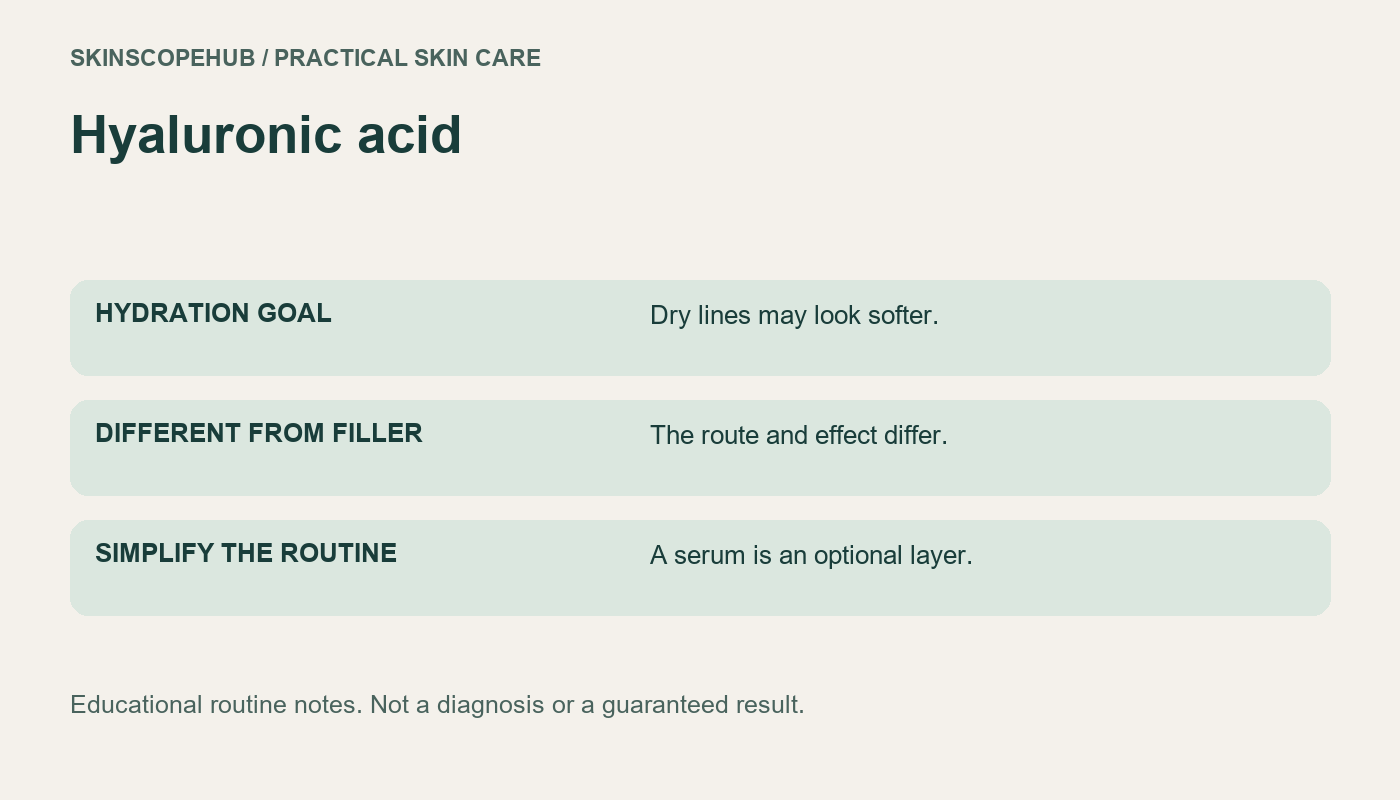
| Humectants | Glycerin, hyaluronic acid | Help hold water; usually work within a moisturizer containing other supporting ingredients. |
| Emollients and lipids | Ceramides, fatty acids, squalane | Help soften and support dry skin; tolerance depends on the finished formula. |
| Occlusives | Petrolatum, dimethicone | Reduce water loss; richer textures may suit localized dry areas. |
Choose “fragrance-free” rather than assuming “unscented” means no fragrance ingredients. Botanical extracts and essential oils are not automatically gentler. A short ingredient list can help you compare products, but length alone cannot predict irritation or allergy.
Niacinamide is optional, not an essential rescue step. If your current moisturizer already contains it and feels comfortable, you may not need an additional serum. If a concentrated serum stings, leave it out. Read the niacinamide ingredient guide for background once your routine is settled.
When can you reintroduce retinol or exfoliating acids?
Wait until your ordinary cleanser and moisturizer feel comfortable and the irritation has settled. Then restart one optional product at a time, at a lower frequency than before, following its directions. Keep the other products unchanged so you can recognize a recurrence.
The AAD describes a small-area test for new skin care products, commonly twice daily for seven to ten days for suitable products used as directed. That home test cannot rule out every allergy, predict facial acne, or replace medical patch testing. Do not use this schedule to override retinoid or acid instructions.
When skin barrier repair needs professional help
Seek prompt care for significant swelling, blistering, severe pain, a spreading rash, eye involvement, or signs of infection. Difficulty breathing or swelling of the lips, tongue, or throat requires emergency help. For persistent or recurrent symptoms, book a dermatology appointment and bring your product list.
DermNet’s irritant contact dermatitis overview explains why avoiding irritants and using emollients can help, while some cases need medical treatment. A serum cannot diagnose or resolve every cause of an uncomfortable face.
Frequently asked questions
How long does skin barrier repair take?
There is no reliable universal timeline. The cause, severity, repeated exposure, and underlying condition all affect recovery. Look for steadily improving comfort; persistent or worsening symptoms need assessment rather than another promised “three-day reset.”
Should I slug my whole face?
A richer moisturizer or a small amount of petrolatum may help localized dry areas, but whole-face occlusion is not essential. Do not seal an irritating active underneath an ointment. If you are acne-prone or have a diagnosed skin condition, ask about an appropriate approach.
Is burning a sign of purging?
Burning, widespread redness, and swelling should not be dismissed as purging. See our purging vs irritation guide for a symptom-based checklist and the limits of judging a reaction at home.
Sources and editorial basis
- American Academy of Dermatology: Dermatologists’ top tips for relieving dry skin.
- American Academy of Dermatology: How to test skin care products.
- DermNet: Irritant contact dermatitis.
This article synthesizes the linked guidance. The routine table is an editorial example, not a clinical trial, and no product testing or medical review is claimed. See our medical disclaimer.