
A vitamin C serum may help improve the appearance of some dark spots, but it cannot identify their cause or guarantee a fading deadline. Start with suitable sun protection, address ongoing acne or irritation, and compare the finished formula rather than assuming the highest percentage works best.
Different forms of discoloration need different assessment. This guide explains six practical questions about a vitamin C serum, what research can support, and when a changing mark should be checked by a clinician.
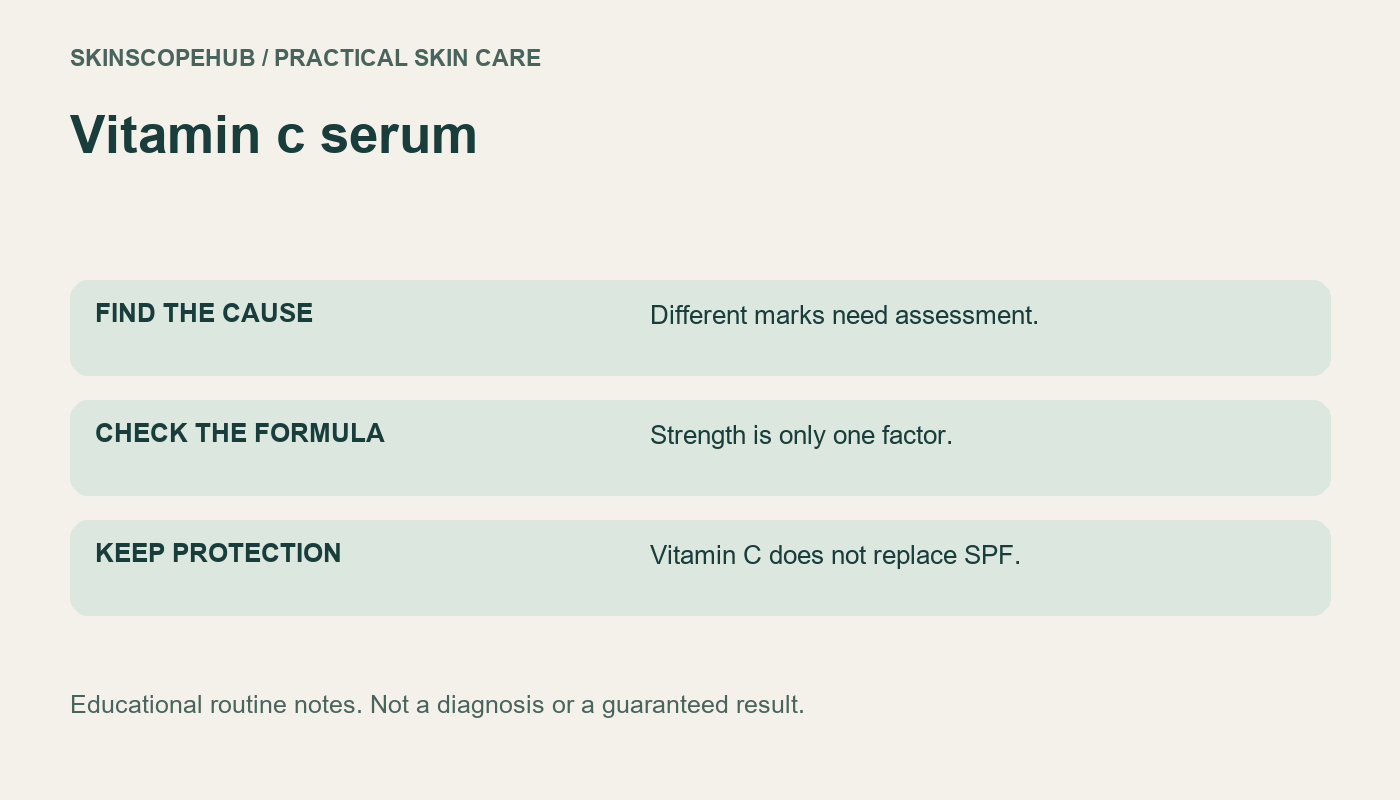
Identify the concern before choosing a vitamin C serum
Post-inflammatory hyperpigmentation can follow acne, eczema, injury, or irritation. Melasma and sun-related spots have different patterns, and not every brown mark is a cosmetic problem. A photograph or ingredient recommendation cannot reliably establish the diagnosis.
The AAD guide to dark spots emphasizes finding and addressing the cause first. Treating ongoing acne or avoiding an irritating product can reduce the exposures producing new discoloration. Do not stop prescribed medicine because you suspect it caused a spot; ask the prescriber.
Get a new, changing, bleeding, or otherwise unusual mark assessed rather than applying a lightening product until it disappears. Persistent or widespread pigmentation can also benefit from a diagnosis and a treatment plan.
6 questions before using a vitamin C serum
1. What does the evidence actually show?
Vitamin C has antioxidant functions and is discussed as a topical option for pigmentation. The review Vitamin C in dermatology describes mechanisms, formulation challenges, and potential clinical applications. It does not prove that every commercial serum produces the same visible result.
The AAD includes vitamin C among ingredients that may help fade existing dark spots. This supports considering a suitable formula; it does not establish a universal percentage of fading, a best brand, or a guaranteed time to improvement.
2. Which form is in the product?
L-ascorbic acid and vitamin C derivatives are not interchangeable names for identical formulas. Stability, delivery, concentration, and the surrounding ingredients matter. A label listing a derivative does not demonstrate that it will behave exactly like a studied L-ascorbic acid preparation.
Check the full ingredient list and instructions. Products can include other active ingredients that contribute to results or irritation. If a brand refers to a clinical study, confirm whether the current finished serum was studied or whether the claim comes from ingredient research.
3. Can your skin tolerate the formula?
Some acidic formulas sting, particularly on already irritated skin. Stronger is not automatically better. Consider a formula you can use as directed without persistent burning, itching, or scaling. A reaction can cause further pigmentation in susceptible skin.
The AAD small-area product testing guidance can help when introducing a suitable cosmetic. A home test cannot rule out every reaction. If your face is currently sore, our skin barrier repair routine offers a simpler starting point.
4. Is sun protection already in place?
A vitamin C serum does not replace sunscreen. Use suitable broad-spectrum SPF 30 or higher and follow reapplication directions, alongside shade and protective clothing. The AAD discusses tinted sunscreen with iron oxide for hyperpigmentation because visible light can worsen discoloration in some skin tones.
A comfortable tint at an adequate application amount can be useful. Check the inactive ingredients for iron oxide rather than assuming every tinted cosmetic provides this protection. Our facial sunscreen guide explains filter categories, texture, and application.
5. How will you review the trend?
Record the product, frequency, comfort, and whether new spots continue to appear. Compare occasional photographs taken in similar lighting, without changing filters or exposure. Daily mirror checks under different lights are a poor way to measure small pigment changes.
Some pigmentation fades slowly after its cause stops. The AAD describes months or longer depending on depth and cause; those observations are not a vitamin C serum deadline. If a routine is comfortable but ineffective, a dermatologist can discuss other options rather than simply adding stronger acids.
6. How should you store and combine it?
Follow the packaging, storage, and use-after-opening instructions. Appearance varies by formula, so color alone is not a universal potency test. If the product changes unexpectedly or you are unsure about its condition, ask the manufacturer and avoid using an expired or questionable bottle.
Do not add vitamin C, retinol, and exfoliating acid together in one large routine change. Follow each product’s directions and separate optional exposures if that improves tolerance. Our salicylic acid layering guide explains why product format and skin comfort matter more than blanket order rules.
A modest routine example
If the label permits morning use, a serum can fit after cleansing and before moisturizer and sunscreen. Evening use can also be suitable when directed. The best schedule is one you can follow comfortably; a morning antioxidant step is not mandatory for every person.
Keep familiar basics while introducing the serum. If niacinamide is already present in your moisturizer, there is no automatic need for another bottle. Our niacinamide evidence guide explains why tolerance depends on the whole formula.
Stop a newly introduced product if it causes persistent burning or a rash. Seek prompt care for significant swelling, blistering, severe pain, or eye involvement. Do not label an escalating reaction as a necessary adjustment phase.
Common questions about a vitamin C serum
Will it erase every dark spot?
No. Response depends on the cause, depth of pigmentation, formula, and ongoing exposures. Some concerns need prescription treatment or another approach after assessment.
Is a higher percentage always faster?
No. Concentration is one factor, and irritation can undermine the goal. Choose a suitable formula rather than escalating strength because of a marketing deadline.
Can I apply it only to the darkest mark?
Follow the intended use on the label and any clinical advice. Do not use spot application to postpone assessment of a changing or unusual lesion.
Should I exfoliate more to speed fading?
Extra exfoliation can cause irritation and further discoloration. A gentler, consistent routine and appropriate treatment of the cause are more useful than repeatedly increasing exposure.
Sources and editorial basis
SkinScopeHub prepared this guide using the linked AAD guidance and research review. We have not conducted a serum trial or obtained medical review of the article. See our medical disclaimer.