Hyaluronic acid in a topical product can help hydrate skin, which may make dryness-related fine lines look less noticeable. That temporary surface change is different from removing wrinkles, replacing lost volume with a filler, or proving that a serum reverses skin aging.
This guide separates those uses and explains five practical limits to consider. You can decide whether a hyaluronic acid product meets a hydration goal without assuming it has the same effects as an injectable treatment.
What hyaluronic acid does in skin care
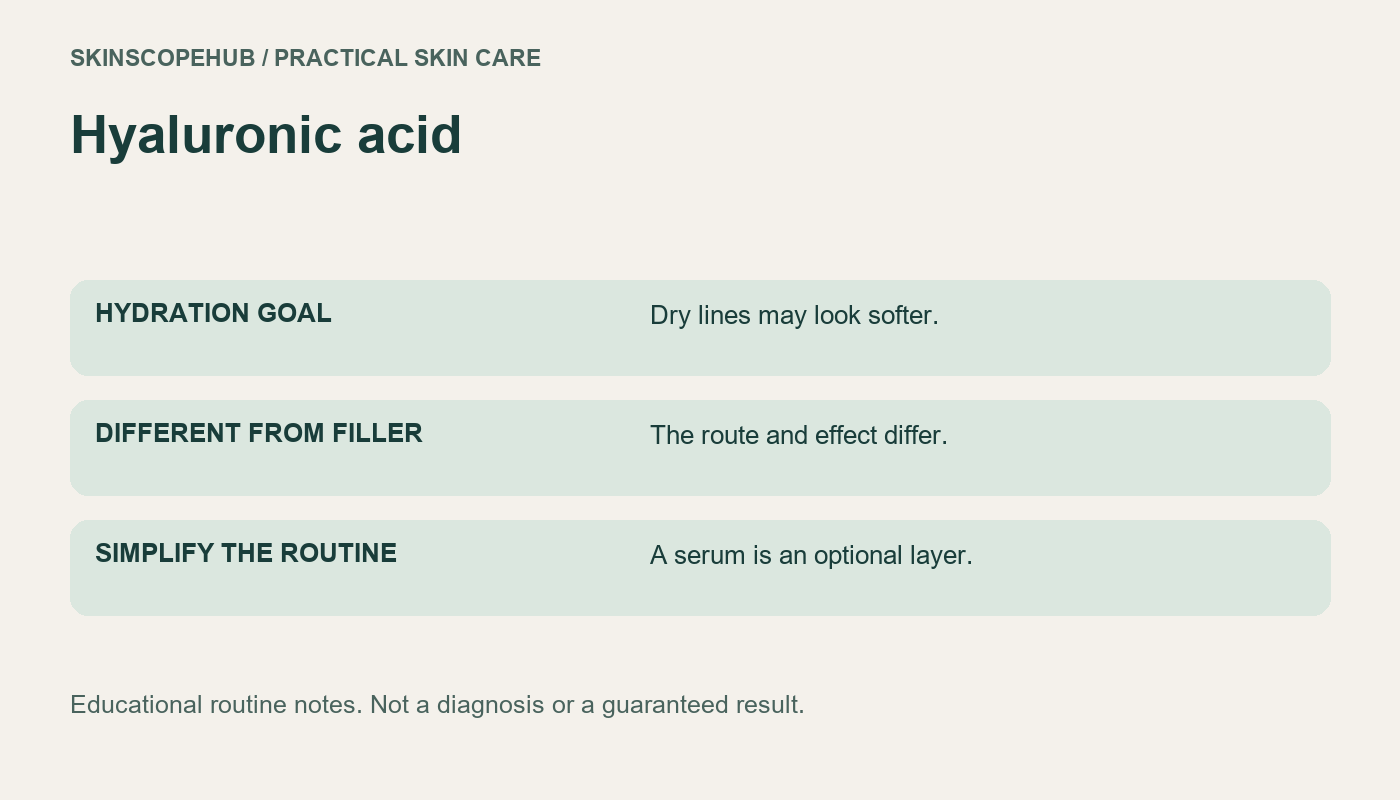
Hyaluronic acid is a molecule naturally present in tissues, including skin. It binds water and is involved in the extracellular environment. In cosmetic formulas it is commonly used as a humectant, an ingredient that helps attract and hold water.
The review Hyaluronic acid: A key molecule in skin aging discusses its biology and changes associated with aging. Evidence about a molecule’s natural role cannot, by itself, establish the benefit of every serum applied to intact skin.
Ingredient lists may include sodium hyaluronate or related forms. The finished formula can also contain glycerin, emollients, and other moisturizing ingredients. Any comfortable hydration benefit may arise from that combination, rather than a single named ingredient.
5 practical limits of hyaluronic acid for fine lines
1. Dryness-related lines are only part of the picture
Fine lines can look more noticeable when the skin surface is dry. Moisturizing can improve that appearance. Lines associated with facial movement, long-term sun exposure, or deeper structural changes are different concerns and need not respond in the same way.
If you notice a smoother surface after applying a serum or cream, that is a useful observation. It is not evidence that collagen was rebuilt or that a wrinkle was permanently removed. Compare the goal you actually care about with what a topical moisturizer can reasonably do.
2. A serum is different from an injectable filler
Both may use hyaluronic acid, but the route, preparation, placement, and clinical purpose differ. A topical product sits on and interacts with the skin surface; a filler is a medical procedure. Sharing an ingredient name does not make the two treatments equivalent.
Do not buy a serum expecting it to provide the same volume change as an injection. If you are considering a procedure, consult an appropriately qualified clinician about suitability and risks. This guide does not provide injection instructions.
3. Molecular-weight claims need product evidence
Brands may advertise multiple molecular weights or “deep hydration.” These descriptions can refer to formulation choices, but do not prove a specific depth of delivery or superior visible results. A headline about molecule size should be backed by relevant testing of the product.
Ask whether evidence comes from laboratory work, a study of a finished formula, or a consumer questionnaire. Each has different limits. A biological review is not a direct comparison showing that one commercial serum is better than another.
4. There is no universal duration or percentage
A claim that all hyaluronic acid products reduce lines for an exact number of hours or by a fixed percentage is too broad. Formula, application, skin condition, environment, and measurement method can differ. We do not assign a universal hydration timeline.
Review comfort and the appearance of dry areas over time. Use similar lighting for photographs, and avoid interpreting changes caused by expression or camera processing as a treatment effect. A pleasant moisturizer can be worthwhile without a quantified wrinkle claim.
5. More layers are not necessarily better
If your moisturizer already contains humectants and keeps your skin comfortable, a separate serum may be optional. Several layers can pill or make a routine harder to follow. A more expensive hyaluronic acid serum is not automatically more useful for your particular concern.
Look at the whole product, including fragrance and other actives if you have reactive skin. A hydrating ingredient does not prevent every possible reaction. Our sensitive skin product-introduction guide offers a method for changing one exposure at a time.
How to fit hyaluronic acid into a simple routine
Follow the product label. Some formulas are applied to slightly damp skin, but damp application is not a rule for every product or a guarantee of deeper delivery. Avoid leaving skin dripping if this interferes with the amount or application of other products.
A serum usually fits after gentle cleansing and before moisturizer when the directions agree. A cream containing the ingredient belongs at the moisturizing step. Use a tolerated moisturizer rather than assuming a humectant serum alone will meet every need of dry skin.
The AAD dry skin guidance discusses gentle washing and applying moisturizer after washing. Avoid hot water and unnecessary scrubbing when dryness is the main concern.
Use adequate broad-spectrum SPF 30 or higher in the morning and follow the bottle’s reapplication directions. The AAD sunscreen FAQ explains the role of sun protection in preventing premature skin aging. A hydrating serum does not supply that protection unless the finished product is a suitable sunscreen.
When to consider a different goal
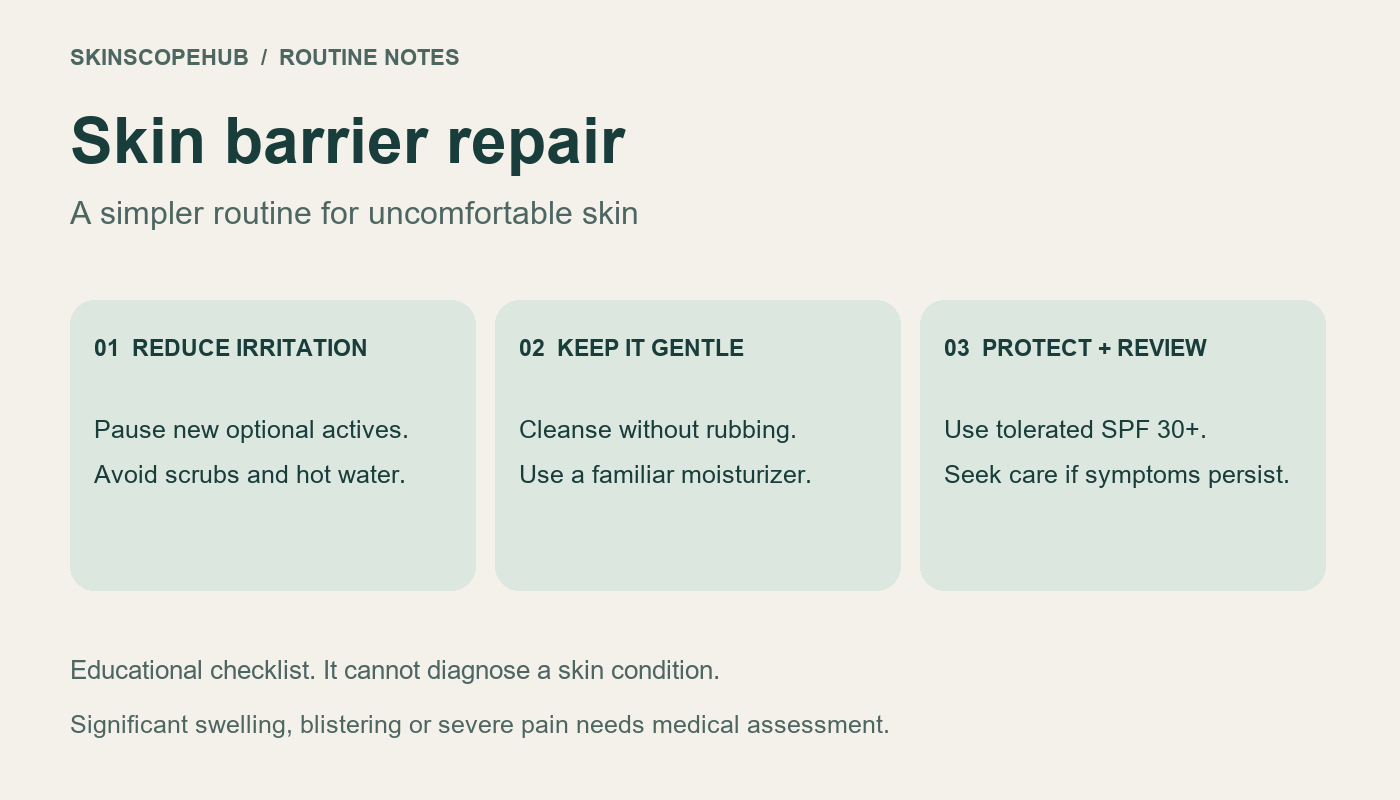
If your main problem is persistent irritation, simplify first using our skin barrier repair guide. Do not use hydration as permission to continue an acid or retinol product that causes ongoing burning.
If your goal concerns photoaging rather than dryness, our retinol and bakuchiol comparison explains evidence limits and tolerability. Our peptide guide provides questions for assessing other cosmetic claims.
Seek advice for persistent painful dryness, cracking, a spreading rash, or symptoms that do not improve with gentle care. The cause may need treatment beyond a cosmetic serum. Significant swelling, blistering, or eye involvement warrants prompt assessment.
Common questions
Can hyaluronic acid permanently remove fine lines?
A topical product should not be assumed to permanently remove them. It may improve hydration and the appearance of dryness-related lines while you use it.
Do I need both serum and moisturizer?
Not always. A comfortable moisturizer may already provide adequate hydration. Choose a separate serum only when it adds a useful benefit to your routine.
Is it always suitable with retinol?
A hydrating formula may fit, but suitability depends on the complete products and their directions. It cannot cancel retinol irritation or make every combination comfortable.
Is one concentration best?
No universal percentage can rank all formulas. Compare label directions, product evidence, texture, and comfort rather than treating the biggest number as a guarantee.
Sources and editorial basis
SkinScopeHub prepared this guide from the linked biological review and AAD guidance. No product trial, filler comparison study, or medical review of this article is claimed. See our medical disclaimer.